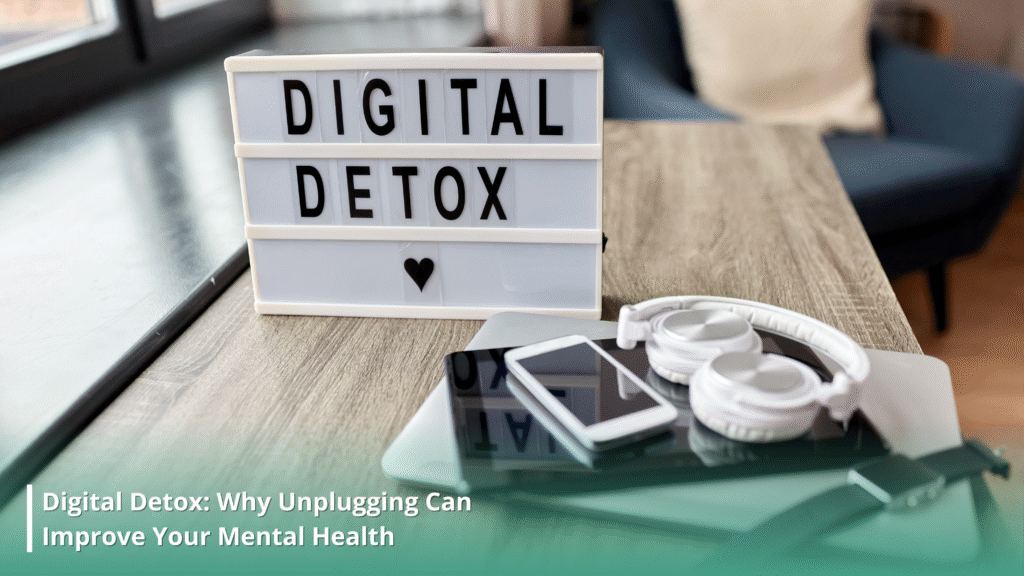
The average person checks their phone 96 times a day about once every 10 minutes according to research by Asurion. Our lives are increasingly mediated by screens: we work on laptops, communicate through messaging apps, scroll endlessly on social media, and unwind with Netflix or YouTube. While these technologies offer incredible convenience and entertainment, they can also come at a cost especially to our mental health.
This is where the concept of a digital detox comes into play. Unplugging, even briefly, allows our brains and bodies to reset, reducing the psychological load that comes from being constantly connected. From improved focus to better sleep and healthier relationships, there are many reasons why stepping away from screens even for a short time can significantly boost your mental wellbeing.
What is a Digital Detox and Why Does it Matter?
A digital detox refers to a deliberate break from digital devices such as smartphones, computers, tablets, and televisions. The purpose is to disconnect from digital distractions and create space for offline reflection, mindfulness, and rest.
This doesn’t mean you have to become a tech minimalist or delete all your social media accounts. Rather, it’s about creating boundaries and developing a more conscious, healthy relationship with technology.
In today’s “always-on” culture, many people experience information fatigue, the mental exhaustion that results from constant updates, alerts, and stimuli. A digital detox provides a much-needed opportunity to unplug from the noise, which can significantly reduce stress levels and restore emotional balance.
Why it matters:
- Digital overstimulation can reduce attention span and increase irritability
- Constant exposure to negative news and online comparison worsens anxiety
- A detox creates time for activities that nourish mental health like reading, journaling, or spending time in nature
Even short, scheduled detoxes like avoiding screens one day a week can make a measurable impact on your mental clarity and overall happiness.
Digital Detox and Mental Health: What the Science Says
The connection between digital detox and improved mental health has been backed by various recent studies.
A 2022 study from the University of Bath found that participants who gave up social media for just one week reported a significant improvement in mood and anxiety levels. Those who stayed off platforms like Instagram, Facebook, and Twitter also reported a 50% increase in life satisfaction.
Another study published in Cyberpsychology, Behavior, and Social Networking showed that limiting screen time to less than one hour per day reduced symptoms of depression and loneliness especially among young adults.
Excessive screen use also correlates with:
- Decreased self-esteem (due to constant social comparison)
- Increased risk of attention deficit symptoms
- Heightened exposure to cyberbullying or toxic online behavior
A digital detox doesn’t need to be radical to be effective. Even small reductions in screen time have been shown to reduce the production of cortisol (the stress hormone) and improve self-awareness.
How a Digital Detox Improves Sleep
The impact of digital devices on sleep is one of the most well-documented reasons to take a digital detox. Phones, tablets, and laptops emit blue light, which suppresses melatonin a hormone that regulates your sleep cycle. This disruption can delay sleep onset, reduce REM sleep, and increase daytime fatigue.
According to Harvard Medical School, using screens right before bedtime can lead to insomnia, poor sleep quality, and reduced alertness the next day.
Incorporating a digital detox into your evening routine often called a “digital sunset” can significantly improve your rest.
Recommended strategies:
- Turn off all screens 60 to 90 minutes before bedtime
- Use a physical alarm clock instead of your phone
- Replace nightly scrolling with reading or journaling
- Enable “Night Shift” or “Dark Mode” on your devices if screen use is necessary
Good sleep is the foundation of mental health. A consistent digital detox before bed not only helps you fall asleep faster but also improves memory, mood stability, and emotional resilience.
Digital Detox to Boost Productivity and Creativity
Constant connectivity means we’re frequently task-switching, even if we don’t realise it. Each time you check a message, glance at an alert, or refresh your social feed, your brain must refocus costing valuable mental energy.
This fragmented attention undermines our ability to engage in deep, focused work, according to Georgetown University professor Cal Newport, author of Deep Work and Digital Minimalism. A digital detox, even during work hours, allows you to reclaim your focus and unleash your creative problem-solving abilities.
Key benefits of a productivity-focused digital detox:
- Reduces “attention residue” from multitasking
- Increases ability to complete high-focus tasks
- Provides uninterrupted time for brainstorming and planning
- Encourages analog activities like drawing, writing, or walking that spark creativity
Try time-blocking “no screen” periods in your day. For example, designate your morning or early afternoon as a digital detox zone, where you work offline, brainstorm ideas, or engage in passion projects without interruptions.
Strengthening Real-Life Connections Through Digital Detox
While digital tools help us stay in touch with friends and family, they often substitute quality interaction with quantity. Social media encourages shallow engagement such as likes, emojis, comments over deeper conversations.
A digital detox gives you the opportunity to reconnect with people around you, whether that’s having dinner with your partner without phones, spending device-free time with your kids, or meeting friends in person rather than texting.
A 2023 study published in Computers in Human Behavior found that couples who practiced daily “device-free dinners” reported higher relationship satisfaction and deeper emotional connection.
Ways to use digital detox for better relationships:
- Institute no-phone zones (like the dinner table or bedroom)
- Schedule screen-free date nights or family time
- Practice active listening without distraction
- Send handwritten letters or make phone calls instead of texting
When you’re fully present, you show people they matter. This presence improves communication, reduces misunderstandings, and builds emotional intimacy which is essential for mental health and personal growth.
Is a Digital Detox Right For You?
If you often feel overwhelmed, scattered, or emotionally drained, it might be time for a digital detox. You don’t have to quit technology cold turkey, but even small, intentional changes can make a meaningful difference in your mental well-being.
Start with one of these:
- A screen-free hour in the morning
- A phone-free bedroom
- A weekend off social media
- Turning off non-essential notifications
The key is consistency over intensity. A sustainable digital detox will help you regain focus, improve your mood, sleep better, and deepen your real-world relationships, all of which are essential for a healthy, balanced life in our digital age.